

Cooperative Contexts for Learning
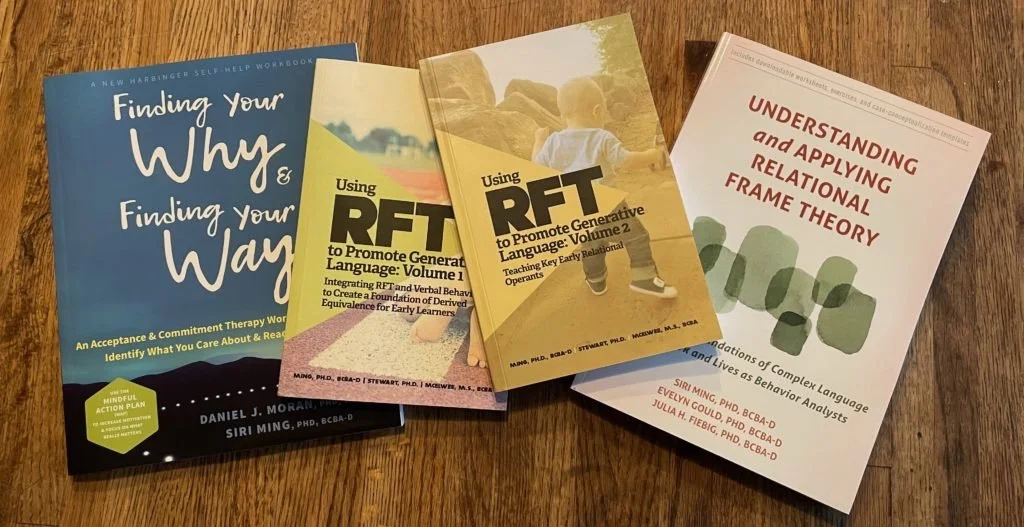
As I mentioned in my last post, we’ve been working on a new chapter for our upcoming comprehensive handbook, on creating cooperative contexts for learning. I have been involved in language-based early intervention in one way or another for most of my career. While much of that work has focused on precise, individualized development of VB and/or RFT-based programming to better establish flexible generative language, it has always begun with establishing a context for learning that is fun and engaging. I used to frame this as establishing “instructional control”, in the sense that we cannot provide instruction unless we have a willing learner who is happy to be with us (and you can see that in the flowchart that accompanies the first volume of myUsing RFT to Promote Generative Language handbook series with Ian Stewart and John McElwee).
This term is a great example of how words have different functions for different people based on our learning histories.
RFT in Early Intervention: Launching the blog
First, I’m so glad you’ve found me and our RFT library—thank you for joining us! I’ve written a few email newsletters over the last couple years, and wanted to share that writing in a more accessible space. I’ll be reposting some material from older emails so those of you who are new can catch up and I can have a clear commitment moving forward.
Over the last two years, Ian and John and I have been spending a lot of time working on new material for a new, comprehensive text on using RFT to promote generative language in early childhood. We’ve updated the material from our previous handbooks, and we’ll be adding considerable new material not only on more advanced relational framing repertoires, but also on establishing important early ones.